In this article
What "pure vegetarian" means here
Bhakti Shyama has a Gujarati pure-vegetarian kitchen, with freshly prepared vegetarian and vegan meals. For many Hindu residents that matters religiously; for anyone else, it means the food comes from a kitchen that works with vegetarian food every day. If the person has a stricter discipline, such as Jain rules on onion, garlic and root vegetables, or keeps away from eggs, raise it at the first conversation and ask what the kitchen can do.
A day's meals
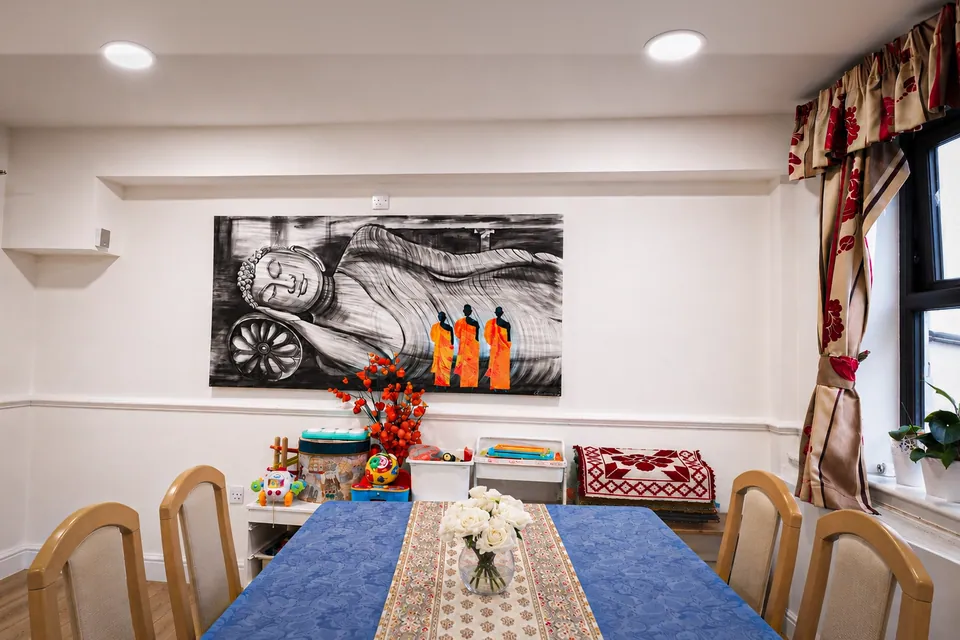
The day starts with breakfast from a freshly prepared vegetarian menu, and meals are served in the dining room at a relaxed pace. Gujarati home cooking usually means dishes such as rotli, shaak, dal, kadhi, rice and khichdi, with chai alongside. Ask to see the current menu, and tell us what the person likes to eat.
Festivals and fasting
Diwali, Navratri, Janmashtami and Holi are celebrated at Bhakti Shyama with traditional food. If the person keeps fasting days, whether weekly or on particular dates, tell us so that they can go into the care plan. For a resident with diabetes, ask how fasting would be planned safely with the nurses and the GP.
Medical diets without losing the food people know
Many residents in a nursing home have at least one condition that affects what they should eat. Ask any vegetarian home how it would adapt familiar food rather than replace it. These are the questions to raise.
- Diabetes: portion control, less sugar in sweets and chai, more pulses and vegetables, and meal timing that fits insulin or tablets.
- Swallowing difficulties: familiar dishes made to the texture recommended by a speech and language therapist, and drinks thickened as prescribed.
- Kidney disease: potassium, phosphate and salt managed on a renal dietitian's advice, which can affect how pulses, tomatoes and dairy are used.
- Weight loss and poor appetite: fortified food and small frequent meals rather than three large ones.
- Heart conditions: less salt and saturated fat, which in Gujarati cooking means adjusting ghee and fried snacks rather than removing them altogether.
Getting enough protein, iron and B12
A vegetarian diet for older people has to be planned, because appetite falls with age and protein needs do not. Dal, chana, rajma, paneer, yoghurt, milk, nuts and tofu are the protein sources; iron comes from pulses, green vegetables and fortified cereals, helped by vitamin C at the same meal; vitamin B12 comes from dairy for vegetarians and from fortified foods or a supplement for vegans, prescribed through the GP where needed. Ask how weight and nutrition are monitored, and when a dietitian would be involved.
Mealtimes as care
Meals are served in the dining room at a relaxed pace, and help is given to anyone who needs it. Ask whether a resident can eat in their room if they prefer. Ask about joining a meal, and about bringing food from home; tell the nurse first so that medical diets are kept safe.
Questions to ask any care home about food
- Is the kitchen fully vegetarian, or is vegetarian food prepared alongside meat?
- Who cooks, and do they cook this food at home?
- Can I see this week's menu and last week's?
- How are fasting days and festivals handled?
- How are diabetic, soft and renal diets prepared, and who advises on them?
- How often are residents weighed, and what happens when someone loses weight?
Chai, water and keeping people hydrated
Dehydration is one of the commonest reasons older people end up in hospital, and a vegetarian kitchen has an advantage here: dal, kadhi, soups, yoghurt, fruit and milk all carry water as well as nutrition. Chai is part of the day at Bhakti Shyama. For a resident who cannot ask for a drink, ask how drinks are offered and how fluid intake is recorded.
Residents who are not vegetarian
Families choosing the home for its language, its nursing care or its location should know that the kitchen is pure vegetarian. For anyone who would miss meat badly, one of our sister homes may suit better.
Visiting at a mealtime
Bhakti Shyama Care Centre is at 1 Balham New Road, Balham SW12 9PH, near Balham station. Book a visit around lunch through the tour form or by calling 020 8772 1499. A meal is a quick way to judge whether a home is right for a parent who has eaten the same food all their life.
Key facts
- Gujarati pure-vegetarian kitchen, with vegetarian and vegan meals.
- Gujarati cooking and festival food.
- Ask how diabetic, soft-texture and renal diets are prepared.
- Call 020 8772 1499 to visit at a mealtime.
Where to go next
Sources: The vegetarian diet (NHS) · Vegetarian, vegan and plant-based diets (British Dietetic Association) · Care Quality Commission · The Vegan Society
A question about care? Our team is here to help.
Talk to our team