In this article
Dementia care at Bhakti Shyama, briefly
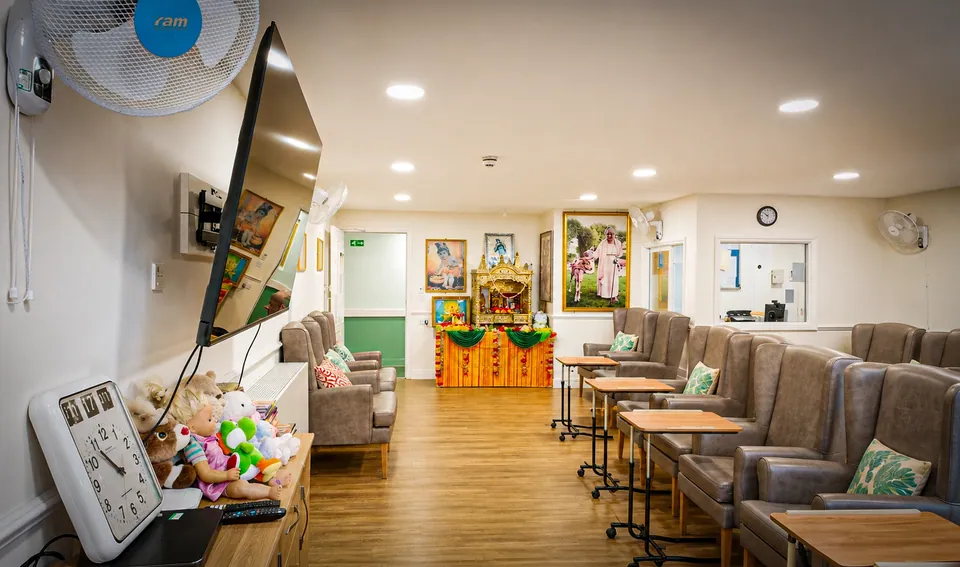
Bhakti Shyama is a 25-room nursing home at 1 Balham New Road, next to a temple, with registered nurses on duty 24 hours and staff who speak Gujarati and Hindi as well as English. A person with dementia can be supported here at different stages, including when dementia sits alongside other health conditions.
Language is the first thing to go, and the first thing we provide
People who learned English as adults can lose it as dementia progresses, while the language of their childhood stays. A parent who spoke confident English for fifty years may now say "mane pani joie chhe" (I need water) or "dukhe chhe" (it hurts), and needs someone who understands. At Bhakti Shyama, Gujarati and Hindi are spoken by staff, so that person has a better chance of being understood.
Food, prayer and the calendar as anchors
Long after a person stops following conversation, they may recognise the smell of a shaak cooking, the sound of the Aarti bell, the taste of chai and the music of a festival. The Gujarati pure-vegetarian kitchen, daily Aarti, daily and weekly bhajans, and Diwali, Navratri and Janmashtami all keep those anchors in place.
Nursing dementia care or residential dementia care
A residential dementia home has care staff, and nurses visit from the community. A nursing home such as Bhakti Shyama has a registered nurse on site at all times. Ask your social worker or hospital team which they recommend. Families may also want to ask how a home would handle language and faith, because those needs tend to grow rather than fade.
How we care for the person, not the diagnosis
We ask the family about the person's past when they are admitted: where they grew up, their work, family, faith and habits. That personal history shapes reminiscence and conversation, and helps carers respond when someone asks for a parent or wants to go home. Calm routines, family phone calls and prayer give the day its rhythm.
Advanced dementia and the end of life
Advanced dementia brings difficulty with swallowing, positioning and comfort, and distress may show only in the face. Our advanced dementia care adds support as needs change. At the end of life, care is comfort-led and the family's faith and rituals are respected. Where assessed as necessary, one-to-one care with dedicated staff can be agreed for set hours.
Families and visiting
Many Gujarati families care for a parent at home for years before dementia makes that too hard, and guilt is common. Relatives are involved in care planning and reviews here, and we want to hear what you notice. Ask about visiting times, including for Aarti and festivals. A short regular visit with a cup of chai can suit a person with dementia better than a long one.
Questions to ask any dementia home
- Will someone who speaks my parent's language be on duty through the day and at night?
- How are pure-vegetarian meals, fasting days and medicines with animal products handled?
- Is a registered nurse on site overnight?
- Could my parent stay as dementia progresses, including at the end of life?
- How do you use a person's history and faith in daily care?
- What do staff do first when someone is distressed, before medication?
- How are sedatives and antipsychotics reviewed with the GP?
- What did the most recent CQC report say?
Paying for dementia care
Dementia does not by itself bring NHS funding. If a registered nurse is assessed as needed, a weekly NHS-funded nursing care contribution goes to the home, and a primary health need can bring NHS Continuing Healthcare, which pays the full fee. The council where the person normally lives means-tests the rest against the national capital limits. A family from Harrow or Brent applies there, not to Wandsworth, even if the home is in Balham. A twelve-week property disregard or a deferred payment may apply.
Visiting Bhakti Shyama
We are at 1 Balham New Road, London SW12 9PH, next to the temple and near Balham station. Book a visit through the tour form or call 020 8772 1499. Bring your parent if you can. How they respond to hearing Gujarati and to the smell of the kitchen can tell you a lot.
Where to go next
Sources: Alzheimer's Society · Dementia guide (NHS) · Care Quality Commission · Social Care Institute for Excellence
A question about care? Our team is here to help.
Talk to our team